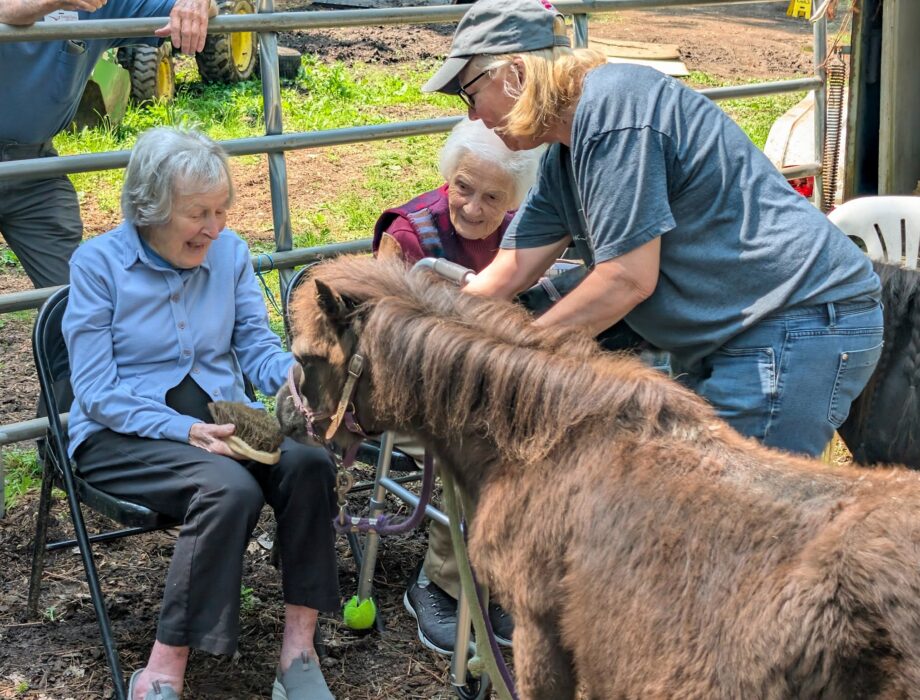
Featured Image: Residents from Kimball Farms Life Care interact with miniature horses during a visit to Berkshire HorseWorks in Richmond, Massachusetts. Experiences like these can support social connection, engagement and quality of life.
Photo courtesy of Kimball Farms Life Care.
Therapeutic recreation is sometimes misunderstood as simple entertainment in senior care and skilled nursing settings. In practice, purposeful recreation can play an important role in rehabilitation, participation and quality of life for older adults receiving skilled nursing or short-term rehabilitation services.
National Therapeutic Recreation Week, observed each July, recognizes the role recreation professionals and activity programming play in helping older adults stay active, involved and connected throughout the care experience. The American Therapeutic Recreation Association (ATRA) describes recreational therapy as a service that uses activity-based interventions to support health and well-being.
At Integritus Healthcare, recreation is woven into daily routines in ways that encourage movement, social connection and meaningful participation. What may look like a simple activity on the surface can also reinforce confidence, structure and recovery over time.
What Is Therapeutic Recreation?
Purposeful activities help people participate in daily life in ways that reflect their needs, interests and abilities. In senior care settings, these activities are not simply added to fill time. They are often connected to care goals, personal rituals and opportunities for participation.
Among older adults receiving skilled nursing care or short-term rehabilitation, recreation can help reinforce movement, attention, communication and confidence. An activity may be adapted so someone can participate safely while rebuilding strength, practicing coordination or staying connected to familiar interests.
This kind of recreation works best when it is part of a coordinated care environment. Activities, therapy goals and individual preferences can all inform how a person spends time throughout the day.
For people receiving skilled nursing and rehabilitation, therapeutic recreation helps connect clinical care with the daily experiences that give care more structure and meaning.
How Recreation Supports Recovery and Daily Life
Recovery involves more than clinical treatment alone. After an illness, injury or hospital stay, older adults may also be adjusting to changes in mobility, stamina, confidence or routine. Recreation can help reinforce participation in daily life during that process.
In skilled nursing and short-term rehabilitation settings, purposeful activities often support movement, coordination, attention and social interaction in ways that feel more natural and less clinical. Group cooking sessions encourage sequencing and hand coordination while creating openings for socialization. Seated exercise classes focus on balance, flexibility and endurance, and music, games and conversation-based activities help residents stay mentally active and connected to familiar interests and pastimes.
Participation also looks different from person to person. Someone recovering from surgery may spend time rebuilding strength and endurance, whereas a long-term resident often benefits from the consistency of structured activities and regular social interaction throughout the week.
In coordinated care settings, recreation is often adapted to individual abilities and integrated into broader care planning. Through life enrichment programming, activities can help reinforce rehabilitation goals while supporting quality of life across different stages of care.
Why Recreation Matters Beyond Entertainment
Meaningful recreation gives shape to time in a care setting. It creates familiar points in the week, reasons to gather and opportunities to stay connected beyond appointments, meals and clinical protocols.
Across Integritus Healthcare communities, therapeutic recreation is part of how skilled nursing and rehabilitation services attend to the whole person. In a short-term program such as Steps to Strength™ Short-Term Rehab, structured activity helps residents stay connected to everyday routines while working toward recovery goals.
When skilled care becomes part of everyday life, the surrounding environment matters. People receiving care still bring preferences, habits, interests and histories with them. Recreation gives those parts of a person’s life room to continue, even as needs change.
Each program works best when it can flex around the individual. Energy levels, comfort with groups, mobility and personal interests all influence how someone takes part. The goal isn’t simply attendance—it’s involvement that feels respectful, accessible and worth returning to.
Frequently Asked Questions
Is therapeutic recreation only for people in rehabilitation?
No. Therapeutic recreation can benefit people receiving short-term rehabilitation, long-term skilled nursing care and other supportive services. Activities are adjusted based on individual interests, abilities and goals, making participation appropriate across different stages of care.
Does someone need to participate in group activities?
Not necessarily. Recreation programs often include a variety of options, including individual activities, smaller gatherings and one-on-one interactions. Participation looks different for everyone and should reflect personal preferences and comfort levels.
How does therapeutic recreation fit into a resident’s care plan?
In coordinated care settings, recreation is one part of the broader resident experience. Care teams consider individual interests, abilities and care goals when planning opportunities for participation, helping ensure activities remain meaningful and accessible over time.
Recreation With Purpose
Therapeutic recreation is often easiest to recognize through the activities themselves. What matters most, however, is the purpose behind them.
Whether someone is rebuilding strength after a hospital stay or settling into a longer-term care routine, meaningful recreation can help create structure, encourage participation and support quality of life. When recreation is integrated into skilled nursing and rehabilitation services, it becomes part of a broader effort to support the whole person—not just clinical needs.
National Therapeutic Recreation Week offers a chance to recognize the value of this work and the role it plays in helping older adults remain active, involved and connected throughout their care experience.
Explore Care Options Near You
If you’re exploring skilled nursing or rehabilitation services for yourself or a family member, Integritus Healthcare can help you learn more about the programs, services and support available across our communities.
Connect with our team to ask questions, explore care options or find a location near you.