After a long winter, the first warm afternoon can feel like a reset. Windows open. Sunlight stretches across the room. Energy shifts.
For older adults—especially those recovering from illness or adjusting to skilled nursing care—that seasonal change can mean more than fresh air. It can signal renewed strength, routine and possibility.
Families often wonder what daily life will look like in a skilled nursing community. Will their parent stay active? Will recovery continue? Will there be opportunities to move, connect and feel engaged?
Spring offers a natural answer.
At Integritus Healthcare, seasonal programming isn’t simply about filling a calendar. It’s designed to support mobility, confidence and connection in ways that feel meaningful—not mechanical.
Here’s how.
Why Seasonal Engagement Matters
Recovery and long-term wellness depend on movement and purpose.
After a hospital stay or during a short-term rehabilitation program, older adults may experience decreased endurance, reduced balance and hesitation with mobility. At the same time, limited stimulation can affect mood and motivation.
Spring provides a natural opportunity to reintroduce:
- Gentle outdoor movement
- Social participation
- Sensory engagement
- Goal-oriented tasks
These are not simply recreational moments. They are therapeutic activities for seniors that reinforce strength, coordination and confidence.
When seasonal change aligns with care planning, progress feels less clinical—and more personal.
Occupational Therapy in Everyday Life
April is National Occupational Therapy Month, recognizing the role occupational therapy (OT) plays in helping older adults maintain independence and rebuild functional strength.
Occupational therapy for seniors focuses on practical skills—standing safely, reaching comfortably, preparing meals, navigating spaces and participating in daily routines.
But effective therapy does not always look like a treatment room. Often, it looks like real life.
A resident stepping carefully along a garden path.
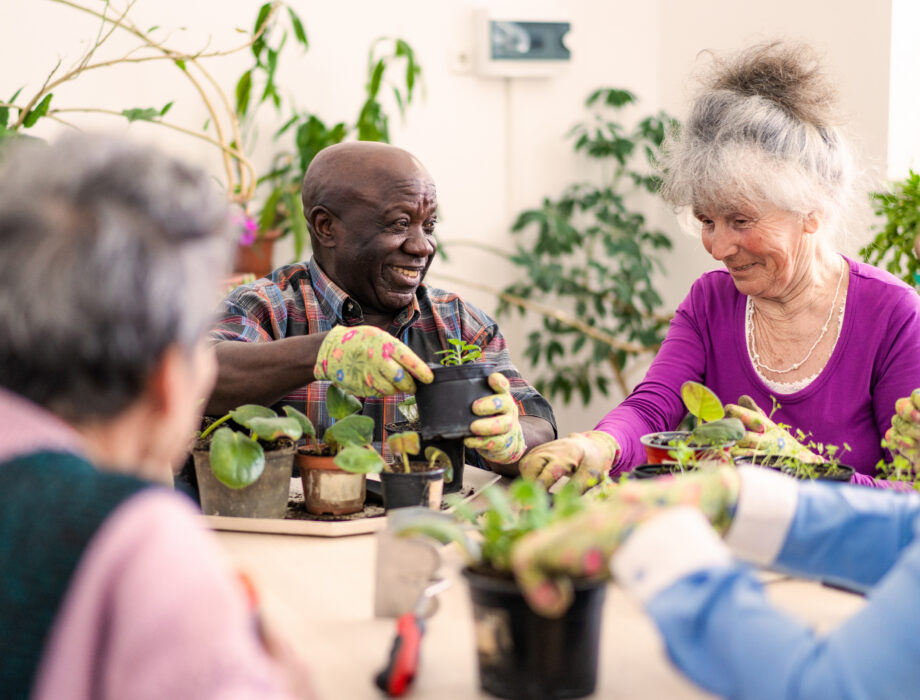
Hands pressing soil into a planter.
A group measuring herbs for a spring recipe.
Under the guidance of care teams, these activities can support:
- Dynamic balance
- Lower-body strengthening
- Grip strength and coordination
- Adaptive techniques for safe participation
Therapy becomes meaningful when it connects to something tangible.
A Spring Story From Windsor
Across Integritus Healthcare communities, life enrichment and therapy teams collaborate to bring seasonal wellness to life.
At Windsor Skilled Nursing and Rehabilitation Center, residents care for raised garden beds each spring. The beds are positioned for accessibility, allowing residents to participate safely while practicing balance and strengthening movements.
With staff guidance, residents adapt techniques to meet their individual abilities. Some focus on planting seedlings. Others water or harvest produce. The work is purposeful, not rushed.
Later, the vegetables and herbs are used in cooking classes during activities programming. Movement in the garden transitions into coordination and planning in the kitchen. Laughter carries across the room as recipes come together.
What looks like a simple garden is, in practice, integrated senior rehabilitation support—woven into daily life.
Strength-building rooted in purpose.
More Than an Activity Calendar
Life enrichment programs in nursing homes are sometimes misunderstood as optional or purely social. At Integritus Healthcare, our Life Enrichment Programming is designed to support engagement, purpose and overall well-being as part of coordinated care.
Interdisciplinary teams collaborate so therapy objectives and enrichment programming reinforce one another. For individuals participating in structured rehabilitation programs, such as our Steps to Strength™ Short-Term Rehab, that coordination supports measurable progress while maintaining meaningful daily engagement. A short-term rehab patient may practice endurance during outdoor sessions. A long-term resident may maintain mobility through seasonal gardening. Engagement supports both body and mind.
For families exploring skilled nursing care for seniors, seeing how residents spend their days often answers a deeper question: Will my parent continue growing—or simply be maintained?
Purposeful seasonal programming supports growth.
Frequently Asked Questions
What does occupational therapy do for seniors?
Occupational therapy helps seniors maintain or regain daily living skills such as dressing, cooking, mobility and safe participation in meaningful activities.
Are activities in skilled nursing just recreational?
In well-coordinated environments, many activities align with therapy goals. Seasonal engagement can support strength, coordination, cognitive stimulation and confidence.
Can outdoor programming be safe for seniors in rehabilitation?
Yes. When guided by care teams, outdoor activities are adapted to individual ability levels to support safe participation and mobility progress.
See Wellness in Action
Choosing skilled nursing care involves more than reviewing clinical services. It involves understanding daily life.
If you’re considering care options, we invite you to visit an Integritus Healthcare community and experience how seasonal programming supports strength, mobility, and connection throughout the year.
Wellness Is Easier to Understand When You See It in Motion
Tour a local community, meet our care teams and see how life enrichment and therapy come together in meaningful ways.